Condensed Matter Physics

Table of contents
- Prof. Tomáš Bzdušek - Theory of topological matter
- Prof. Titus Neupert - Condensed matter theory
- Prof. Johan Chang - Superconductivity and Magnetism
- Prof. Marc Janoschek - Correlated Quantum Matter
- Prof. Fabian Natterer - Quantum Matter
- Dr. Matthias Hengsberger, Dr. Christian Tzschaschel - Laser Lab
- Prof. Johanna Nordlander - Oxide Materials
- PD. Tatiana Latychevskaia (PSI) - Coherent Diffraction Imaging
Prof. Tomáš Bzdušek - Theory of topological matter

Our research revolves around topological phases of matter. Topological states exhibit properties resilient against a broad range of perturbations and include phenomena such as quantized Hall conductivity in semiconductor devices and spin-momentum-locked metallic states on the surface of topological insulators. We use diverse mathematical techniques and numerical approaches to investigate topological invariants and their observable fingerprints in a broad range of physical systems, including crystalline solids as well as classical simulators. We also study the effects of lattice geometry, thereby pushing topological phenomena towards synthetic systems with fractal structure or with emergent negative curvature.
Synthetic non-Abelian gauge structures
Formation of topological insulators and semimetals in crystalline systems is restricted by the representation of their crystalline symmetry (e.g., translations, rotations) inside the momentum space. Over the past five years, new types of topological features have been realized in synthetic matter by enforcing the symmetry group to be projectively represented; for example, when commuting translations are represented by anticommuting operators. Such effects are achieved by altering the sign of the hopping amplitudes in an appropriate periodic manner, which mathematically corresponds to a Z2 gauge theory. In a recent preprint, we have shown how these ideas can be generalized to arbitrary discrete gauge groups, including non-Abelian ones. Our construction utilizes so called Cayley-Schreier lattices, where each physical site is decorated by a ‘pillar’ of internal degrees of freedom transforming in the gauge group. The obtained platform opens up a formerly overlooked extension of topological band theory.
Correlations in hyperbolic space
When degrees of freedom are too densely connected (e.g., when the bonds constitute triangles, with seven or more triangles meeting at each site), the lattice exhibits emergent negative curvature at large distances. Such systems are described as ‘hyperbolic’ and exhibit relations to holographic principles. Our group has formerly developed a software package for computing hyperbolic single-particle spectra. Recently, we have extended our efforts to correlated states, which has allowed us to discover unique features of superconductivity and of quantum spin liquids in curved geometry.
From higher gauge theory to photovoltaic materials
Concepts involving Berry curvature, Chern topology, and quantized Hall conductivity are mathematically unified through the language of gauge theory in momentum space. Very recently, refined topological obstructions arising in toy models with a small number of energy bands were related to more intricate mathematical structures, including higher gauge theory and bundle gerbes, while also uncovering a new topological principle for a quantized shift current response. Our group collaborates with experts on first-principles calculations, aiming to elevate these theoretical predictions towards a concrete class of novel photovoltaic materials.
-
- Zoom
-
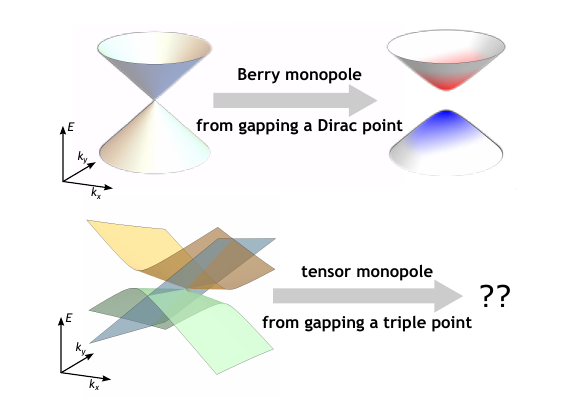
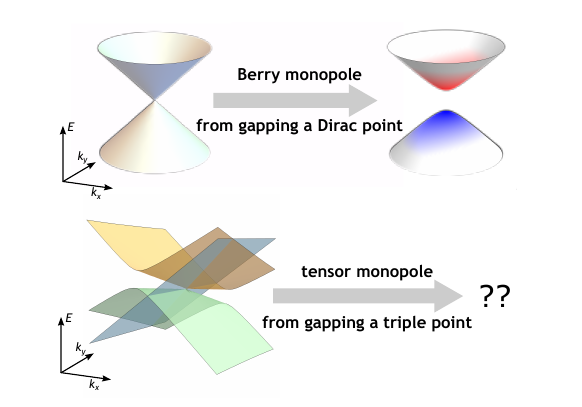
Opening of an energy gap in the momentum space of a Dirac semimetal (e.g., in graphene) through suitable perturbation generates a monopole of Berry curvature. These monopoles govern quantization of Hall conductivity. In a similar spirit, appropriate perturbation applied to a three-fold band degeneracy can generate so-called tensor monopole. Such monopoles are predicted to govern quantization of a photovoltaic response; however, concrete proposals for their realization in crystalline solids are currently missing.
Highlighted Publications:
- Topological non-Abelian gauge structures in Cayley-Schreier lattices,
Z. Guba, R.-J. Slager, L. K. Upreti, and T. Bzdušek, arXiv:2509.25316 (2025) - Hyperbolic Spin Liquids,
P. M. Lenggenhager, S. Dey, T. Bzdušek, and J. Maciejko,
Phys. Rev. Lett. 135, 076604 (2025) [arXiv:2407.09601] - From quantum geometry to non-linear optics and gerbes: Recent advances in topological band theory;
T. Bzdušek, arXiv:2511.20608 (2025)
Prof. Titus Neupert - Condensed matter theory

We study topological phases of quantum matter with numerical and analytical tools. Topological electronic states are characterized universal and robust phenomena, such as the Hall conductivity in the integer quantum Hall effect, that are of fundamental interest or promise applications in future electronics. We study and propose concrete materials to realize such topological effects, but are also interested in studying abstract models to understand what phases of matter can exist in principle. Our numerical toolbox includes tensor network algorithms to study strongly interacting quantum many-body systems. Furthermore, we work at the interface of quantum computing and condensed matter physics.
Fractional quantum Hall states with a twist
The fractional quantum Hall effect is the only solidly confirmed experimental realization of a phase of matter with so-called intrinsic topological order. As such, it supports excitations that are particle-like but unlike any particle we know: anyons. Uniquely enabled by the two-dimensional world of such systems, anyons have distinct quantum-statistical behavior from the fermions and bosons that make up all standard model particles. Upon exchange — enacted by braiding — their wave functions acquire well-quantized but fractional phases.
Fractional quantum Hall states have been discovered in the 1980s in semiconductor heterostructures under very large magnetic fields and at lowest temperatures — rather impractical experimental conditions. However, in 2023 they were also found in very special ferromagnetic systems without an external magnetic field. This class of fractional quantum Hall states is called fractional Chern insulators and was theoretically envisioned by Titus Neupert and colleagues already in 2011 (arXiv:1012.4723). Despite this theoretical work, their experimental discovery came as a surprise. They were found in bilayers of almost atomically thin semiconductors, in which the two layers are twisted against each other so that their lattices combine to a superlattice with a much larger unit cell.
This discovery prompted the condensed matter theory group to reignite their study of fractional quantum Hall phases: We numerically investigated the possibility of time-reversal symmetric fractional quantum Hall states [1] in twisted MoTe2 . We studied the effects of impurities, around which a varying number of anyons can bind — leaving a unique signature of the phase [2]. Importantly, we also extended the range of numerical methods that can be employed to simulate fractional Chern insulators. For the first time, we showed that this phase of matter can be obtained in computations with two-dimensional tensor networks, specifically infinite projected entangled pair states (iPEPS) [3]. These simulations have the advantage of computing properties directly in the thermodynamic limit rather than for a finite system of only a few electrons. Combining such calculations with first-principles derived models should enable simulations with predictive power in the future and help us to find even more exotic and more robust topological orders.
-

- Zoom
-
In contrast to a symmetry-broken phase such as a charge density wave (left), the electrons in a topologically ordered phase behave more like an incompressible liquid. They form collective excitations, anyons, with remarkable properties.
Highlighted Publications:
- Regarding the existence of abelian fractional topological insulators in twisted MoTe2 and related systems
Y. H. Kwan et al. Communications Physics, (2026); link. - Sensing the binding and unbinding of anyons at impurities,
G. Wagner, T. Neupert, arXiv:2507.08928. - Simulating fermionic fractional Chern insulators with infinite projected entangled-pair states,
H. Chen, T. Neupert, J. Hasik, arXiv:2512.20697.
Prof. Johan Chang - Superconductivity and Magnetism

We investigate quantum matter phases emerging from strong electronic interactions. High-temperature superconductivity, strange metals, density-wave instabilities and electronic driven metal-insulator transitions are studied by synchrotron techniques. Using angle-resolved photo-emission spectroscopy (ARPES) and resonant inelastic x-ray scattering (RIXS), we reveal electronic structures and properties of such correlated electron systems.
Quantum phase transitions tuned by magnetic field, uni-axial or hydrostatic pressure are furthermore explored by high-energy x-ray diffraction. Our group also has technical initiatives to develop innovative and compact cryo-cooling methodology. Finally, we are involved in data science analysing x-ray scattering results using machine learning methodology.
Hallmarks of quantum matter are complex phases emerging from electronic interactions that can be experimentally studied with advanced spectroscopy techniques.
Anomalous Hall effect and symmetry breaking
Anomalous Hall effect (AHE) has emerged as a key indicator of time-reversal symmetry breaking (TRSB) and topological features in electronic band structures. Absent of a magnetic field, the AHE requires spontaneous TRSB but has proven hard to probe due to averaging over domains. The anomalous component of the Hall effect is thus frequently derived from extrapolating the magnetic field dependence of the Hall response. We showed that discerning whether the AHE is an intrinsic property of the field-free system becomes intricate in the presence of strong magnetic fluctuations. We use the Weyl semimetal PrAlGe, where TRSB can be toggled via a ferromagnetic transition, providing a transparent view of the AHE’s topological origin. Through a combination of thermodynamic, transport, and muon spin relaxation measurements, we contrasted the behavior below the ferromagnetic transition temperature to that of strong magnetic fluctuations above. Our results provide general insights into the interpretation of anomalous Hall signals in systems where TRSB is debated, such as families of kagome metals or certain transition metal dichalcogenides.
-
-
- Zoom
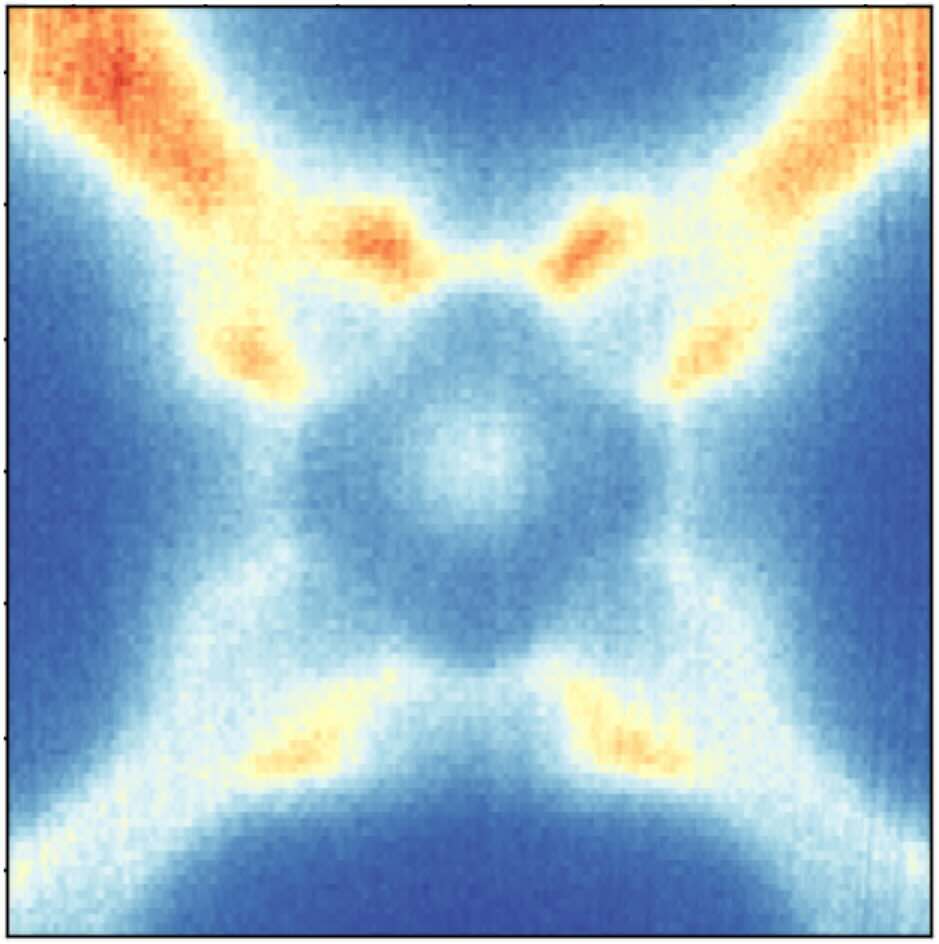
- Fermi surface contour observed on PrAlGe.
Mott Insulator Ranking
Strong electron correlations drive Mott insulator transitions. Yet, there exists no framework to classify Mott insulators by their degree of correlation. Cuprate superconductors, with their tunable doping and rich phase diagrams, offer a unique platform to investigate the evolution of these interactions. However, spectroscopic access to a clean half-filled Mott-insulating state is lacking in compounds with the highest superconducting onset temperature. To fill this gap, we introduced a pristine, half-filled thallium-based cuprate system, Tl2 Ba5 Cu4 O x . Using high-resolution resonant inelastic x-ray scattering, we probed long-lived magnon excitations and uncover a pronounced kink in the magnon dispersion, marked by a simultaneous change in group velocity and lifetime broadening. Modeling the dispersion within a Hubbard–Heisenberg approach, we extract the interaction strength and compare it with other cuprate systems. Our results established a cuprate universal relation between electron-electron interaction and magnon zone-boundary dispersion. Superconductivity seems to be optimal at intermediate correlation strength, suggesting an optimal balance between localization and itinerancy.
-
Highlighted Publications:
- Magnetic Excitations of a Half-Filled Tl-based Cuprate
I. Biało et al., Communications Materials 7, 50 (2025) - Anomalous Hall Effect due to Magnetic Fluctuations in a Ferromagnetic Weyl Semimetal,
O. Forslund et al., Physical Review Letters 134, 126602 (2025) - Discovery of giant unit-cell super-structure in the infinite-layer nickelate PrNiO2+x ,
J. Oppliger et al., Communications Materials 6, 3 (2025)
Prof. Marc Janoschek - Correlated Quantum Matter

Our research is centered on genuine quantum phenomena in bulk materials that arise due to collective electronic behavior. These electronic correlations strongly couple spin, charge and lattice degrees of freedom resulting in emergent and rich low-energy physics. We study materials in which such collective quantum phenomena at the atomic-scale are borne out in exotic and functional macroscopic properties. We tune the underlying quantum interactions via external control parameters (pressure, field, strain, crystal chemistry) to understand the properties of quantum materials. For this purpose, we probe quantum matter with state-of-the-art large-scale neutron, photon and muon experiments.
A metallic Shastry-Sutherland lattice
In insulating quantum magnets that exhibit well-localized magnetic moments, magnetic frustration results in rich and exotic physics ranging from spin-ice to spin-liquids, and experimental realizations of Kitaev magnets, which have the potential to host Majorana fermions. In turn, insulating frustrated magnets are relevant both for our fundamental understanding of solids as well as for future quantum computing applications. In stark contrast to extensively studied insulating quantum magnets, less attention has been paid to magnetic frustration in metallic quantum materials. This is because the effects of magnetic frustration in metallic systems are substantially weaker due to the long-range nature of itinerant magnetic exchange interactions. Nevertheless, it has been recently demonstrated that frustration is also a relevant ingredient for understanding the magnetism in strongly correlated electron materials. Examples are heavy fermion materials where metallic quantum spin liquid states have been proposed, skyrmion lattice materials, cubic geometrically frustrated rare-earth intermetallics as well as van-der-Waals metals. A common theme in all of these metals is the interplay between frustration and magnetic anisotropy.
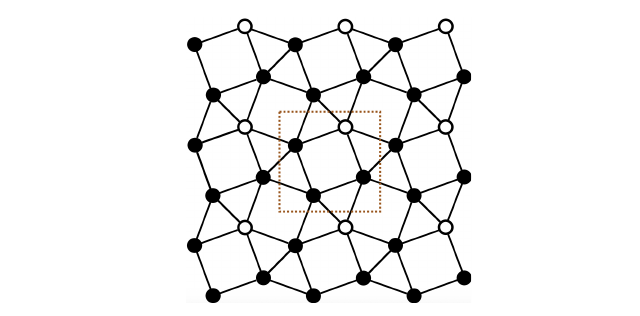
Here we study a prototypical material that combines precisely the ingredients of magnetic frustration and anisotropy using single-crystal neutron diffraction and spectroscopy. The 4 f -electron intermetallic ErB4 . crystallizes in the tetragonal space-group P4/mbm, where the magnetic moments on erbium sites can be mapped onto a Shastry-Sutherland lattice (SSL). The SSL is a square lattice with antiferromagnetic nearest-neighbour interactions in every square and antiferromagnetic next-nearest-neighbour interactions in every second square resulting in geometrical frustration. At the same time ErB4 exhibits strong Ising-like anisotropy along the tetragonal c axis. The low-temperature magnetic ground state of ErB4 is characterized by collinear antiferromagnetic order (CAFM). Application of a magnetic field along the Ising axis results in the emergence of a half-plateau (HP) phase characteristic for SSL models. Our neutron diffraction study demonstrates that HP phase in this Ising-like system adopts an up-up-up-down structure (see figure) consistent with recent Quantum Monte-Carlo simulations for ErB4 by Wierschem and Sengupta.
These Monte-Carlo simulations further suggest to stabilize this sequence of phases the canonical SSL model that typically only incorporates exchange interactions up to the nearest-neighbor level needs to be extended to incorporate transverse exchange interactions up to fourth order. Interestingly, if higher order interactions are considered a spin-supersolid phase arises in the simulations in a small field interval between the CAFM and HP phases. A spin supersolid is an exotic quantum state that combines the properties of a rigid, crystalline solid and a superfluid, which flows without friction. While our experimental study did not identify this spin-supersolid, the consistency between our experiments and the simulations suggests that this exotic phase maybe stabilized by tuning ErB4 via pressure or chemical substitution. Our study highlights that magnetically frustrated and correlated metals may also host exotic quantum phases.
-

- Zoom
-
The spin structure of the half-plateau phase in ErB4 identified by our neutron diffraction study.
Highlighted Publications:
- Magnetic phase diagram of ErB4 as explored by neutron scattering,
S. Flury, et al., Phys. Rev. B 112, 224441 (2025)
Prof. Fabian Natterer - Quantum Matter

Our research group focuses on low-dimensional quantum materials and quantum sensing. We explore how matter receives her properties from the interaction between individual atoms and molecules using atomically resolved scanning tunneling microscopy (STM). By subjecting matter to extreme conditions - such as cryogenic temperatures, exposure to magnetic fields, or doping – we find control knobs that fine-tune a material’s property. Our investigations include measurements of the electronic structure using fast quasiparticle interference imaging and Josephson tunneling.
Electronic Structure Mapping of 2D Materials
We infer the band structure of two-dimensional quantum materials using fast quasiparticle interference imaging (QPI). QPI works by measuring the point-spectroscopy (local density of states, LDOS) at every topographic location. To speed up this traditionally slow technique, we utilize compressed sensing and parallel spectroscopy. While the former enables the measurement of fewer locations, the latter speeds up the LDOS mapping. The dynamical nature of parallel spectroscopy helped us introduce and novel measurement concept in which we actively subtract large current amplitudes before they reach the preamplifier and that would otherwise have led to saturation. HDR-STM allows us to measure spectroscopy against a vastly varying background with improved resolution at small currents that will serve to study the electron-phonon coupling in correlated quantum materials.
Atomically resolved Josephson Junction STM
We implement a Josephson junction STM (JJ-STM) to spatially map the properties of superconductors. Every Josephson junction consists of two weakly interacting superconductors, here represented by a superconducting sample and tip that are separated by a vacuum barrier. The coupling of these two superconductors establishes a strict relationship between their phase-difference that can be controlled by the application of DC and AC voltages. By tailoring the properties of our tips, we seek to coherently control the phase-difference for potentiometry and operation of JJ as qubits for quantum sensing applications at the atomic scale. This works because the JJ sensitively couples to the macroscopic as well as the local environment, allowing us to localize atomic scale defects limiting coherence times of superconducting qubits.
-

- Zoom
- Newly commissioned scanning tunneling microscope, operating at 320 mK and equipped with a vector magnetic field for quantum materials characterization using fast quasiparticle interference mapping and Josephson tunneling.
Highlighted Publications:
-
Clip-on lens for scanning tunneling luminescence microscopy,
A. Cahlík, C. Müller, F. Natterer, MethodsX, 13:102828 (2024) -
High dynamic range scanning tunneling microscopy,
A. Karić, C. Marques., B. Zengin, F. Natterer, MethodsX, 13:1028257 (2024)
Dr. Matthias Hengsberger, Dr. Christian Tzschaschel - Laser Lab

We use advanced spectroscopic techniques to implement a broad research program spanning from the characterization of electronic and atomic structures on surfaces to ultrafast processes in strongly correlated quantum materials.
Following extensive renovations in 2025, including upgrades to the electrical infrastructure and improved air conditioning, our laser lab is now operational again. Specific on-going research topics include the investigation of transient photo-induced states in the vicinity of metal-insulator transitions. The experiments will be carried out in pump-probe mode with femtosecond time resolution in a closed-cycle liquid Helium cryostat. (Tzschaschel)
Moreover, as part of the general infrastructure at the Department of Physics we presently set up and commission an electron spectrometer for angle-resolved photoelectron spectroscopy. The goal is to reach high energy resolution in the range of a few meV and low sample temperature. The setup will have several narrow-band uv sources. One of those, a picosecond laser-driven vacuum ultraviolet source providing narrow band radiation with energies between about 10.5 and 17.5 eV is currently being commissioned. (Hengsberger)
Prof. Johanna Nordlander - Oxide Materials

Our work seeks to create quantum materials by design through thin film epitaxy. The thin film geometry offers a unique opportunity to explore fundamental thickness limits, dimensional cross-over effects and stabilization of novel metastable phases. Our focus is on complex oxides, where high flexibility in chemical composition and strong electronic correlations lead to rich phase diagrams that may host exotic phases of quantum matter such as high-temperature superconductors, multiferroics, spin liquids and topological phases. We aim to engineer such phases in thin films by careful design of lattice geometry to set or break symmetries at the nanoscale that in turn control the macroscopic properties of the system.
Novel functional oxides as thin films
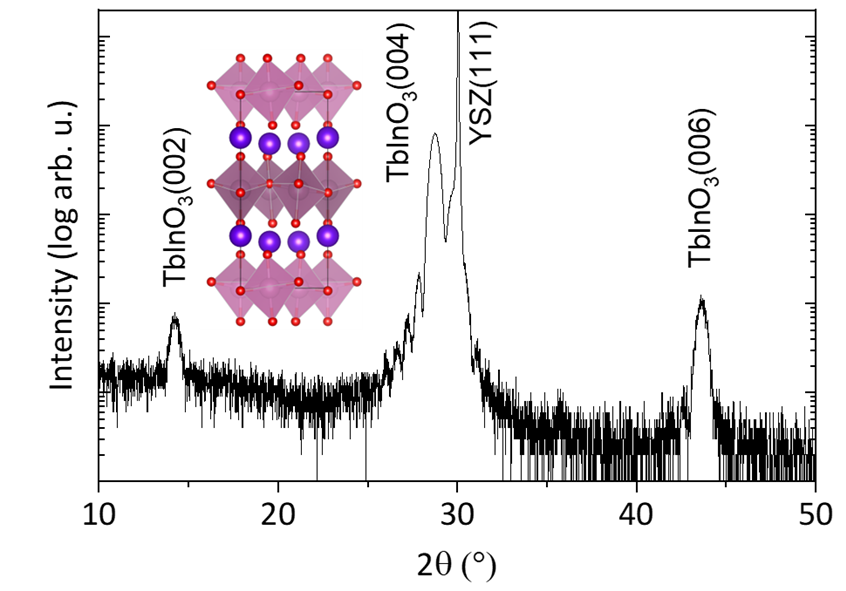
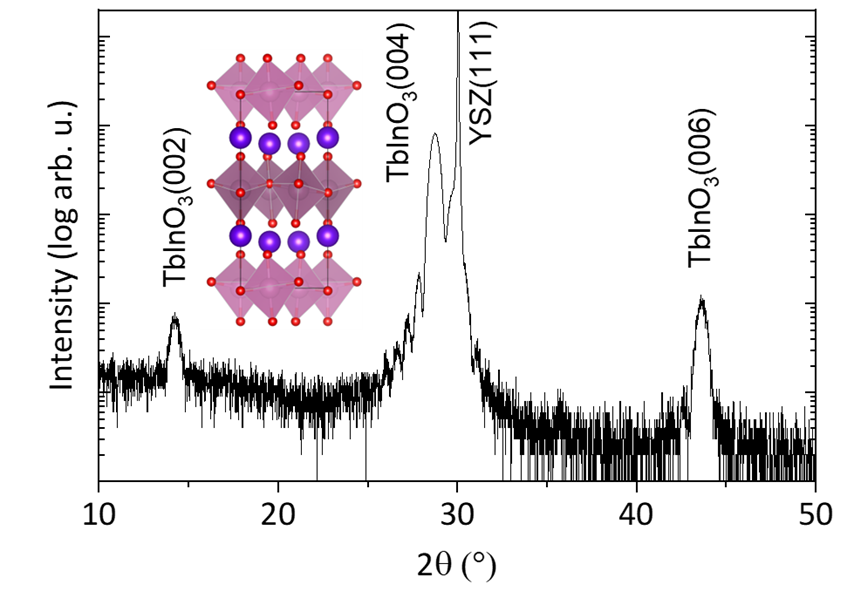
Our group is setting up a state-of-the-art pulsed laser deposition lab to construct nanoscale single layers and heterostructures of oxide quantum materials in a monolayer-by-monolayer approach. Current research includes the thin-film realization of quantum spin liquid (QSL) candidates and exploring novel routes to characterize its frustrated magnetic ground state at low film thicknesses. In QSL materials, strongly frustrated magnetic interactions lead to highly entangled spins without long-range order even down to the lowest temperatures. The ground state of such materials is suggested to be a proximate phase to unconventional superconductivity and may provide a materials platform for topological quantum computing. Despite these prospects, realizing a thin-film counterpart to bulk QSL candidate materials remains challenging and only few such thin film systems have been reported to date. Recently, in a project with Harvard University, we successfully synthesized for the first time thin films of TbInO3 , belonging to a family of frustrated magnets recently suggested to host a QSL ground state. Our thin films reveal the preservation of the frustrated magnetic state without spin freezing or long-range order down to at least 1 K, where further studies regarding epitaxial strain and interfacial doping may provide new tuning knobs unique to the thin film geometry to manipulate the magnetic and electronic ground states of QSL candidate systems. In a collaboration with the Paul Drude Institute and Helmholtz Zentrum Berlin in Germany, we further have leveraged the unique capabilities of in-situ X-ray diffraction both during oxide molecular beam epitaxy as well as during low-temperature sweeps, both experiments at BESSY II, to explore the physics of nanoscale layering of functional materials that combine different types of phase instabilities such as metal-to-insulator or magnetic transitions, and the possible influence of interfacial coupling, strain, and proximity effects on the macroscopic properties.
-
- Zoom
- First epitaxial synthesis of QSL candidate material hexagonal TbInO3 . X-ray diffraction theta-2theta scan revealing a (0001)-oriented TbInO3 epitaxial layer grown on a YSZ substrate.
Highlighted Publications:
- Signatures of quantum spin liquid state and unconventional transport in thin film TbInO3 ,
J. Nordlander et al., Nat Commun 16, 9469 (2025) - Structural and electronic properties of Ti- and Ca-doped hexagonal TbInO3 ,
K. Talit et al., Phys. Rev. Materials 9, 114401 (2025)
PD. Tatiana Latychevskaia (PSI) - Coherent Diffraction Imaging




Our research is focused on developing lens-less coherent imaging techniques for high-resolution and three-dimensional imaging of nano-scaled objects, two- dimensional materials (graphene, hexagonal boron nitride, transition metal dichalcogenides, etc.) and macromolecules. In coherent diffraction imaging (CDI) and holography techniques, the intensity of the wave diffracted by the sample is acquired by a detector in the far field, and the phase distribution of the diffracted wave together with the sample structure is then reconstructed by applying numerical methods. Employing short-wavelength radiation, such as electron or X-ray waves, in lens-less imaging techniques allows for imaging at atomic resolution.
Ultra-clean graphene for transmission electron microscopy by direct polymer-free adhesion method
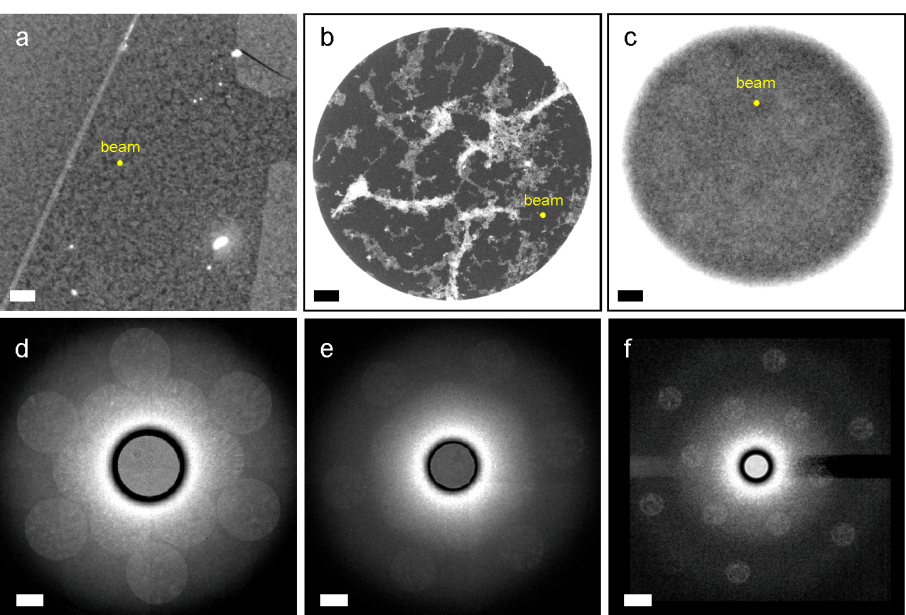
Graphene is an ideal sample support for electron microscopy experiments. Its crystalline nature and single atomic thickness make it easy for any objects placed on graphene to be identified and studied. At the same time, these advantages can easily be negated by contamination of the graphene surface, which often occurs during growth and transfer procedures. For atomic-resolution electron microscopy imaging, the requirements for the sample support are very demanding – the graphene support must be free of any contamination at the atomic scale. To obtain atomically clean graphene for sample support in transmission electron microscopy (TEM) studies, we developed a new polymer-free transfer method by direct adhesion, which produces contamination-free graphene [1]. To check the quality of the prepared graphene samples, we acquired high-angle annular dark-field (HAADF) and convergent beam electron diffraction (CBED) images of the samples; we used the electron microscopes at the University of Manchester and ScopeM ETH Zurich. The HAADF and CBED images of the samples prepared by the new graphene transfer protocol show the absence of any contamination originating from the transfer procedure and only the presence of some soft contamination due to hydrocarbons (see Figure). These observations were supported by simulations of graphene with hydrocarbons. Overall, the samples prepared using the new direct polymer-free adhesion method demonstrate superior quality when compared to the samples prepared by procedures known from the previous studies [1].
-

- Zoom
-
Transmission electron microscopy images of the graphene samples prepared using the three protocols, all acquired at 80 keV. (a) – (c) High-angle annular dark-field (HAADF) images, the location of the beam for CBED indicated by the yellow dot, scalebars are 100 nm. (d) – (f) the corresponding CBED patterns, scalebars are 2 nm-1. In (a) and (d), the sample was prepared by PMMA-assisted wet-transfer method, in (b) and (e) – by catalytic transfer method, and in (c) and (f) – by novel direct polymer-free adhesion method. Adapted from [1].
Highlighted Publications:
-
Ultra-clean graphene for transmission electron microscopy by direct polymer-free adhesion method
S. Mustafi et al, submitted (2025)
Table of contents
- Prof. Tomáš Bzdušek - Theory of topological matter
- Prof. Titus Neupert - Condensed matter theory
- Prof. Johan Chang - Superconductivity and Magnetism
- Prof. Marc Janoschek - Correlated Quantum Matter
- Prof. Fabian Natterer - Quantum Matter
- Dr. Matthias Hengsberger, Dr. Christian Tzschaschel - Laser Lab
- Prof. Johanna Nordlander - Oxide Materials
- PD. Tatiana Latychevskaia (PSI) - Coherent Diffraction Imaging