Theory of Topological Matter
We are a condensed matter theory group based at the University of Zurich. Our research focuses on the investigation of topological and correlated phases in a broad variety of quantum and classical systems. The considered setups include conventional crystalline compounds, as well as dissipative and periodically driven systems, and even lattices with distinctive curved or aperiodic geometry.
Grid containing content elements
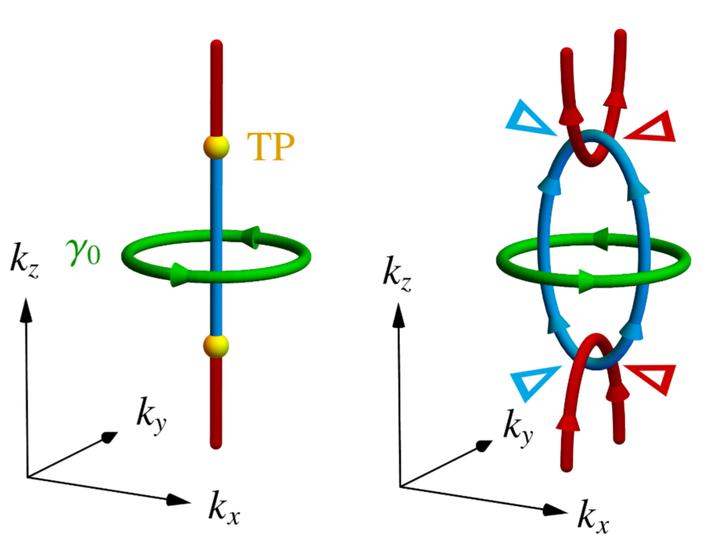
We uncover non-Abelian topological phenomena in electronic band structures, where Dirac points and nodal lines exhibit braiding and linking behavior beyond conventional Abelian invariants. Our work predicts crystalline materials that realize these novel multiband topological effects.
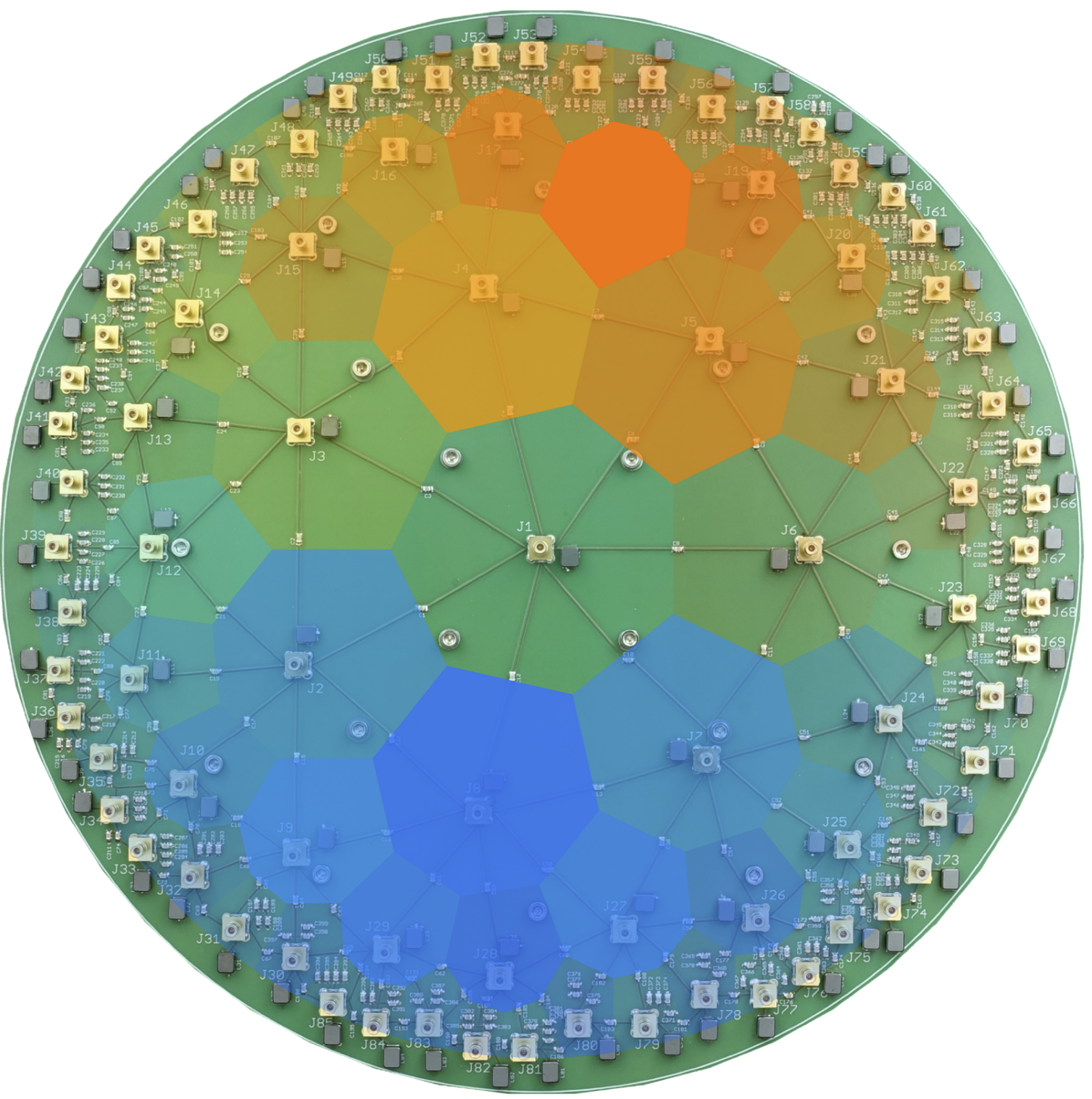
We investigate topological and correlated phases in hyperbolic lattices: regular arrangements of sites with emergent negative curvature. Using theory, software tools, and electric-circuit simulators, we study hyperbolic topological insulators, semimetals, and spin liquids beyond flat-space geometry.
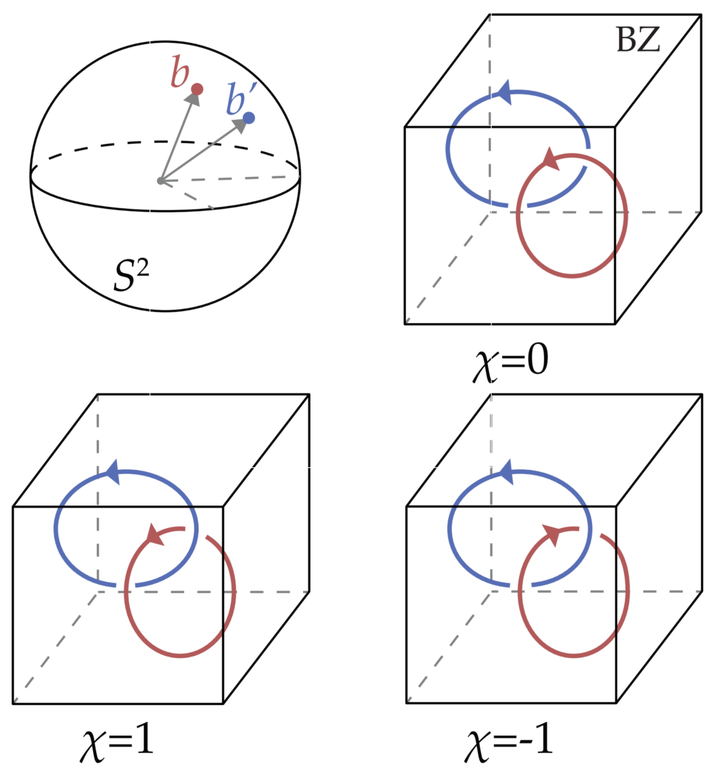
We study unstable topological invariants that arise only in crystalline systems with restricted Hilbert-space dimension. These topological obstructions result in multicellular Wannier functions and topological in-gap states only at sharply terminated boundaries. Paradigm examples include the Hopf insulator and the returning Thouless pump.
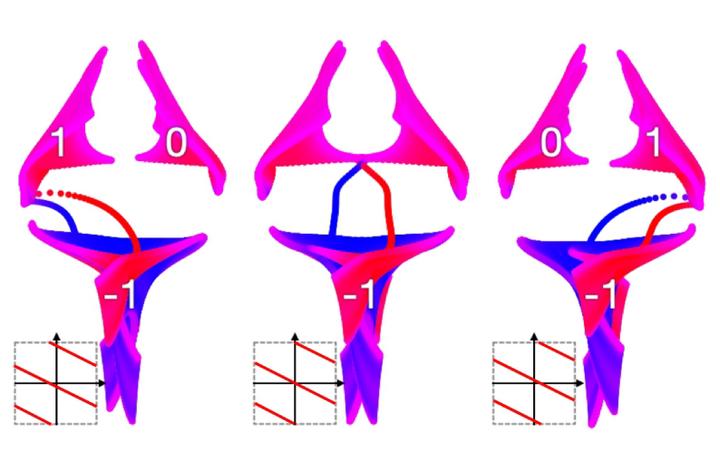
We study topological phases in non-Hermitian systems with gain and loss, uncovering exceptional points, Alice string defects, and braid-group topology of complex eigenvalues. We also investigate the non-Hermitian skin effect, where bulk states accumulate at system boundaries.
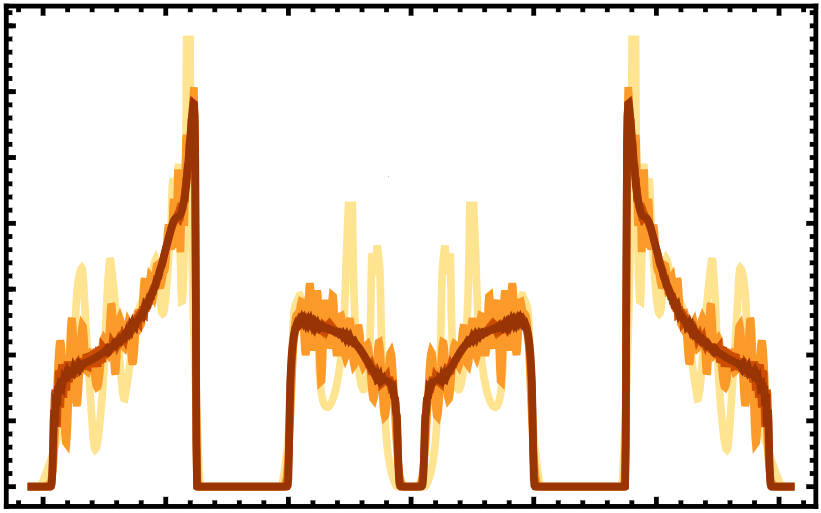
Browse through the computational tools developed in our group: the packages HyperCells and HyperBloch for modeling spectra of hyperbolic lattices and a tool for computing the patch Euler class of Dirac points in two-dimensional band structures.
Read short descriptions of selected recent publications by our group.
